It’s the middle of summer. You can hear your air conditioner humming outside. The vents are blowing air. But your house is still warm, and the temperature just won’t drop.
This is one of the most frustrating HVAC problems homeowners face and one of the most common. The good news is there are several specific, diagnosable reasons this happens. Some you can fix yourself and others need a pro.
Here’s a rundown of the most likely culprits, starting with the simplest.
1. Your Air Filter Is Clogged
This is the first thing to check, and it causes more cooling problems than most homeowners realize. When your air filter is clogged with dust and debris, airflow through the system is severely restricted. Your AC runs, but it can’t move enough air across the evaporator coil to actually cool your home.
What to do: Check your filter. If it’s gray and dense with dust, replace it immediately with a new one of the same size and rating. Standard filters should be changed every 3 months. After replacing it, give the system 30–60 minutes to recover.
2. Your Thermostat Is Set Incorrectly or Malfunctioning
It sounds obvious, but always verify your thermostat is set to COOL (not FAN or HEAT), and that the temperature setpoint is actually lower than the current room temperature. If the thermostat isn’t reading the room temperature accurately, the system may not run enough cycles to cool the space.
What to do: Try setting the thermostat 5 degrees below the current room temperature and see if the system responds. If you have a smart thermostat, check for any scheduling or hold settings that might be overriding your preferences. If your thermostat is more than 10 years old, it may be time for an upgrade.
3. The Outdoor Unit Is Blocked or Dirty
Your outdoor condenser unit works by releasing heat from inside your home to the outside air. If the condenser coils are coated in dirt, grass, debris or if shrubs or fencing are blocking airflow around the unit it can’t release heat effectively. The result is a system that runs constantly but can’t reach your set temperature.
What to do: Turn off the system and visually inspect the outdoor unit. Clear away any plants, debris, or clutter within 2 feet. Gently rinse the coil fins with a garden hose. Make sure there’s clear space on all sides for airflow. Do not use a pressure washer.
4. Your Home Has Significant Air Leaks
Your AC might be working perfectly, but if conditioned air is escaping through gaps in your attic, walls, doors, or ductwork, you’re essentially trying to cool the outdoors. Air leaks are one of the most underappreciated causes of an AC system that can’t keep up.
What to do: Check door and window seals for visible gaps. Feel for warm air infiltration around electrical outlets on exterior walls. If your home is older or poorly insulated, a home energy audit can identify major leak points. Also check for duct leaks in your attic or crawlspace. A significant amount of conditioned air can be lost before it ever reaches your living spaces.
5. Your System Is Low on Refrigerant
Refrigerant is the substance that actually transfers heat out of your home. If your system has a refrigerant leak, cooling capacity drops sharply. Your AC runs but the air coming from the vents barely feels cold. You might also notice ice forming on the outdoor unit or the indoor coil.
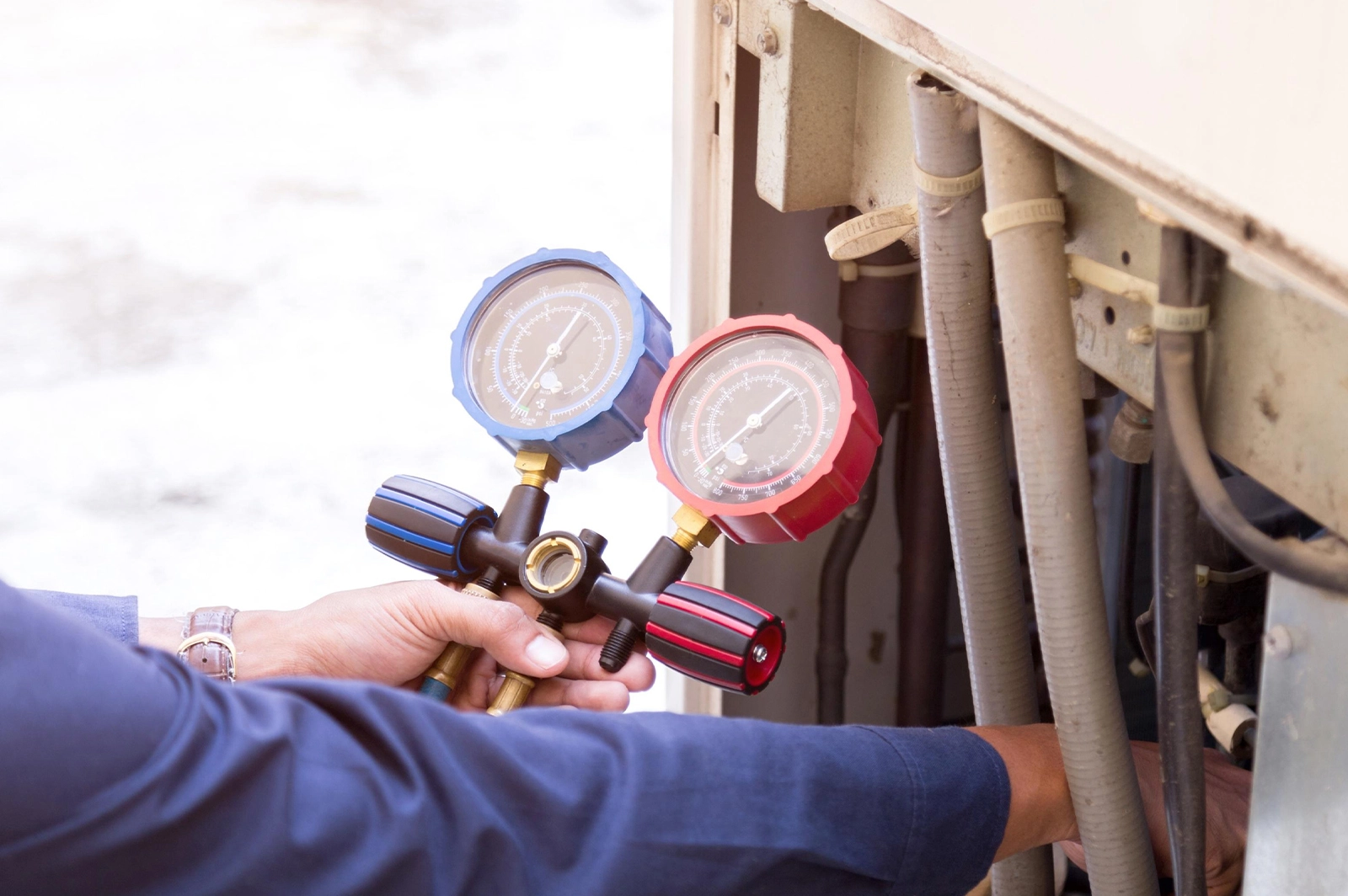
What to do: This one requires a licensed HVAC technician. Refrigerant is a regulated substance, and handling it requires certification. A technician can test the system pressures, locate the leak, repair it, and recharge the refrigerant. Note: if someone offers to ‘top it off’ without finding and fixing the leak, find another contractor.
6. Your Ductwork Has Leaks or Blockages
Even a perfectly functioning air conditioner can’t cool your home if conditioned air is leaking into unconditioned spaces like your attic or walls before it reaches your rooms. Studies show that the average home loses 20–30% of air through duct leaks. A blocked duct from debris, a closed damper, or a collapsed section can also starve individual rooms of airflow.
What to do: Walk through your home while the AC is running and feel air coming from each vent. If some rooms are noticeably weaker than others, or if you have vents with little to no airflow, duct issues are likely. A technician can perform a duct leakage test and seal problem areas.
7. Your AC Is Simply Too Old
Air conditioners lose efficiency as they age. A 15-year-old system may only be running at 60–70% of its original capacity, especially if it hasn’t been regularly maintained. If your system is 12 years or older and struggling to keep up, it may be time to evaluate replacement. Modern systems run much more efficiently.
When to Call a Professional If you’ve checked your filter, thermostat, and outdoor unit and your AC is still not cooling properly, it’s time to call a licensed HVAC technician. Low refrigerant, duct leaks, frozen coils, and electrical problems require professional diagnosis. Don’t wait to check on these issues, especially in peak summer heat.
Is your AC running but not cooling? Caryl Mechanicals offers prompt diagnostic service to get your home comfortable again. Contact us to schedule a visit.
