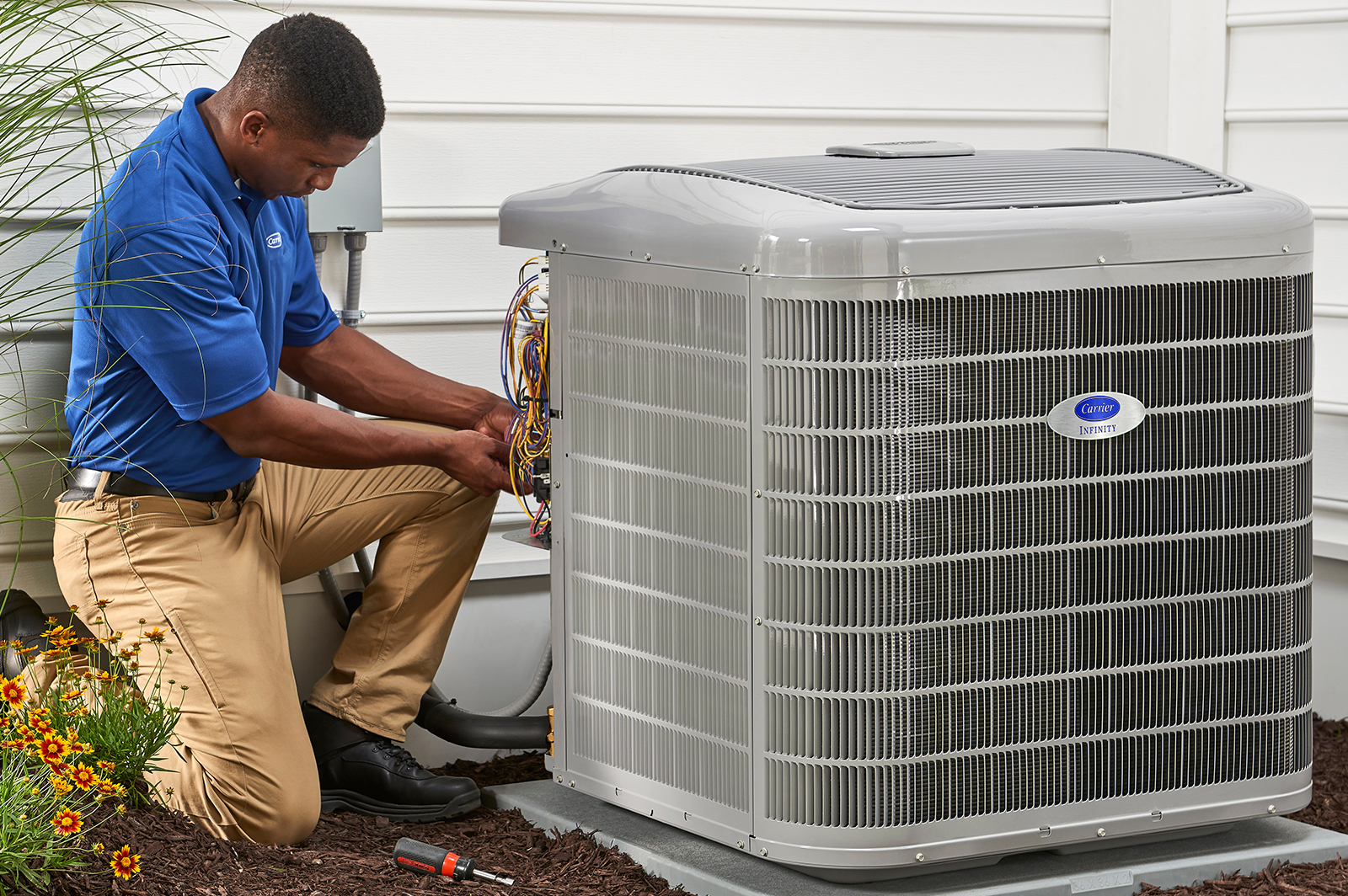
Air conditioners aren’t silent, but they shouldn’t be loud. A properly functioning system makes a steady, low hum when it’s running and a soft click when it starts and stops. Any sound outside of that is worth paying attention to.
Different noises point to different problems. Here’s a breakdown of the most common AC sounds and what they typically mean.
1. Banging or Clanking
A loud banging or clanking noise usually means something inside the system has come loose or broken. In the outdoor unit, it often indicates a loose or broken component inside the compressor. It can also mean a fan blade has become unbalanced and is striking the casing.
What to do: Shut the system off immediately. Running a unit with a loose or broken component can cause rapid, expensive damage. Call a Caryl HVAC technician.
2. Rattling
Rattling is usually less severe than banging and often points to debris in the outdoor unit, a loose panel or screw, or a slightly off-balance fan blade. Leaves, twigs, and small stones can get into the condenser unit and rattle around during operation.
What to do: Turn off the unit and inspect the outdoor cabinet. Clear any visible debris. Tighten any loose panels. If the rattling continues after cleaning and tightening, have a technician check the fan and motor mounts.
3. Squealing or Screeching
A high-pitched squeal or screech typically involves the blower motor or its belt (on older systems). It can indicate a worn motor bearing, a slipping or deteriorating belt, or a motor that needs lubrication.
What to do: Don’t ignore this one. A squealing motor bearing can progress to a full motor failure, which is a much more expensive repair. Schedule service soon.
4. Hissing or Bubbling
These sounds are among the most important to address quickly. A hissing noise can indicate refrigerant leaking from the system. Bubbling or gurgling often points to refrigerant or moisture moving through lines where it shouldn’t be.
What to do: A refrigerant leak reduces cooling capacity and can damage the compressor if left unaddressed. This requires a licensed HVAC technician. Do not attempt to handle refrigerant yourself. Refrigerant is a regulated substance.
5. Clicking That Won’t Stop
A single click when your AC starts and stops is completely normal. That’s the contactor switching the system on and off. But if you hear rapid or continuous clicking, especially when the system is trying to start, that usually points to an electrical problem. It could be a failing relay, a bad capacitor, or an issue with the control board.
What to do: Continuous clicking without the system starting is a sign something is preventing the unit from running. Turn the system off and call a technician. Repeatedly trying to start a struggling unit can burn out the compressor.
6. Humming Without Starting
If your outdoor unit hums but the fan isn’t spinning, the capacitor is a likely suspect. The capacitor stores an electrical charge that gives the motor a boost to start. When it fails, the motor hums but can’t overcome the initial resistance to begin rotating.
What to do: This is a fairly common repair for a technician. Never try to manually spin the fan to get it started.
7. Sounds at Startup You Haven’t Heard Before
If your system has recently developed a new noise at startup or during operation that wasn’t there before, that’s a signal something has changed in the system. New sounds don’t resolve on their own. Catching a problem early almost always means a less expensive repair.
Hearing something unusual from your AC? Don’t wait until it stops working. Caryl Mechanicals provides prompt diagnostic service to identify and fix the problem before it gets worse.
Contact us to schedule a visit.
